
The Great Hydration Myth: Why Drinking Water Isn't Enough for Your Skin
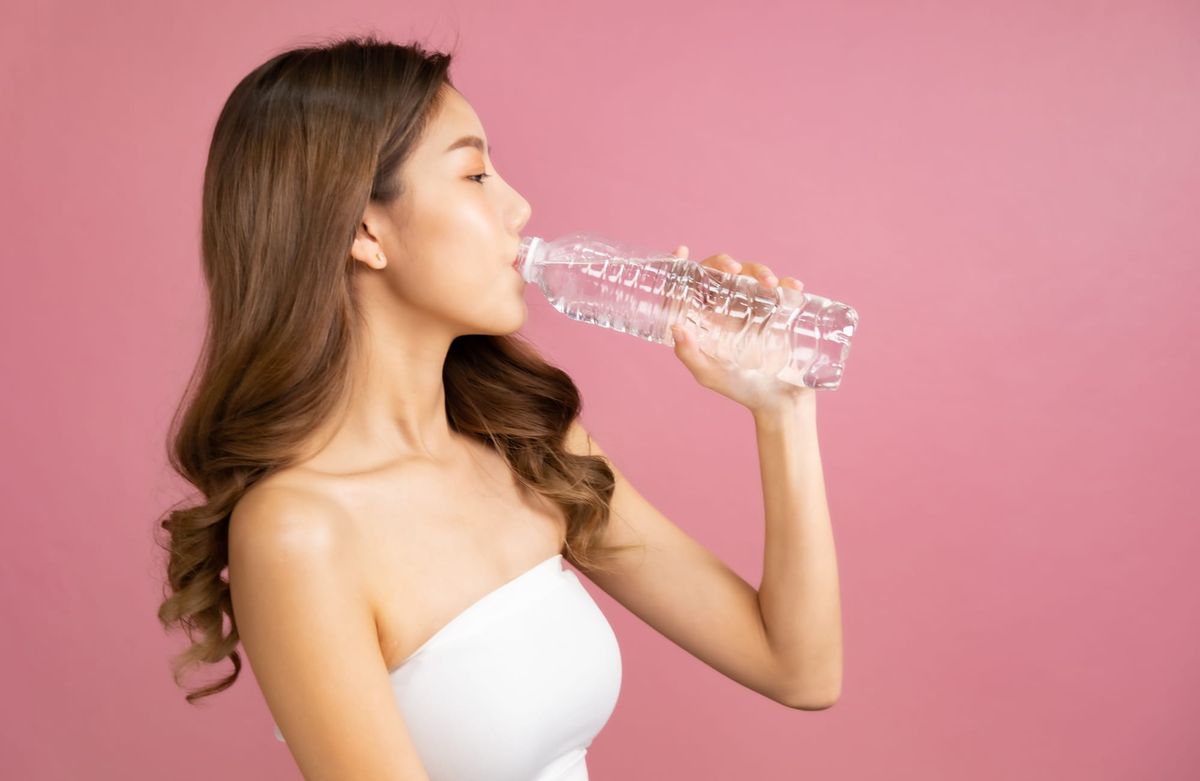
We have been told the same story for decades: "If your skin is dry, you aren't drinking enough water." It is the ultimate beauty cliché, repeated by supermodels, wellness gurus, and even some medical professionals. The image of a glowing, dew-drenched complexion being fueled by a gallon of spring water is a powerful marketing tool. But as we navigate the advanced dermatological landscape of 2026, it is time to face a hard, biological truth.
Drinking water is almost never the solution to dry skin.
To understand why, we have to look at how the body prioritizes resources, the difference between "dehydration" and "dryness," and the vital role of the lipids and ceramides that act as the gatekeepers of your glow.
The Priority Queue: Your Skin is Last in Line 🧠➡️🩸
The human body is an incredibly efficient survival machine. When you swallow a glass of water, it doesn't take an express elevator to your cheeks. It enters your digestive system, is absorbed into your bloodstream, and is immediately directed to where it is needed most.
Your body operates on a strict priority queue:
- Vital Organs: Your brain, heart, kidneys, and liver require precise hydration levels to keep you alive. They get the "first dibs" on every drop you drink.
- Muscles and Soft Tissue: These are next in line to ensure mobility and metabolic function.
- The Integumentary System (Your Skin): Because your skin is the outermost layer of your body, it is the very last organ to receive systemic hydration.
By the time the water you drank reaches the dermis (the deeper layer of the skin), most of it has already been utilized by your internal systems. If you are severely dehydrated, your skin will look sallow and "sunken," but drinking excess water won't make your skin "extra" hydrated. Once your internal organs are satisfied, your body simply flushes the rest out through your kidneys.
The Reality Check: You cannot "overflow" your way into glowing skin. If you are already healthy and hydrated, drinking a third liter of water will only result in more trips to the bathroom, not a more moisturized face.
Hydration vs. Moisture: The Battle of Terms 🧪
One of the biggest reasons for confusion is that we use the words "hydrated" and "moisturized" interchangeably, but in the world of skincare science, they mean very different things.
- Hydration (The Water Content): This refers to the amount of water inside your skin cells. When cells are well-hydrated, they are plump and healthy.
- Moisture (The Lipid Content): This refers to the oils and fats that sit between those cells. This is the "seal" that prevents the water from escaping.
You can have plenty of water in your cells (hydration), but if your skin's surface lacks the necessary lipids (moisture), that water will evaporate into the air within minutes. This process is called Transepidermal Water Loss (TEWL). This is why many people who drink gallons of water still struggle with flaky, tight, or irritated skin. They aren't lacking water; they are lacking the "lid" to keep the water inside.
The Heroes of the Barrier: Lipids and Ceramides 🛡️
If your skin was a house, the skin cells (corneocytes) would be the bricks. But a pile of bricks doesn't make a wall. You need mortar to hold them together and make the structure waterproof. In your skin, that "mortar" is composed of Lipids—specifically Ceramides, Cholesterol, and Fatty Acids.
1. Ceramides: The Waterproof Seal
Ceramides are a type of waxy lipid molecule. They make up about 50% of your skin’s barrier. Their primary job is to create a protective layer that limits moisture loss and protects against environmental damage.
- The Problem: As we age, or if we use harsh cleansers, our natural ceramide levels drop.
- The Result: The "mortar" cracks. Even if you drink all the water in the world, it simply leaks out through these microscopic cracks in your barrier.
2. Cholesterol and Fatty Acids: The Flexibility Factor
While ceramides provide the structure, cholesterol and fatty acids provide the fluidity and resilience. They ensure the skin barrier is flexible enough to move without cracking. Without these lipids, the skin becomes "brittle," leading to that uncomfortable, tight feeling after washing.
The Science of TEWL: Why the Environment is Stealing Your Glow 🌬️
In 2026, our environments are more hostile to our skin than ever before. Air conditioning, central heating, and urban pollution all act as "vacuums" for skin moisture.
When the air around you is dry, it tries to find equilibrium by pulling moisture from the nearest source—your face. If your lipid barrier is weak, the water in your skin is sucked out into the atmosphere.
- The Myth: "I'll just spray a hydrating mist on my face all day."
- The Fact: Unless that mist is followed by an occlusive moisturizer (a cream with lipids), the mist will actually increase TEWL. As the mist evaporates, it takes the skin's own natural moisture with it.
How to Actually "Hydrate" Your Skin (The 2026 Strategy) 🧴✨
If drinking water isn't the answer, what is? The most effective way to hydrate the skin is from the outside-in, focusing on barrier preservation.
Step 1: Use Humectants on Damp Skin
Ingredients like Hyaluronic Acid, Glycerin, and Polyglutamic Acid are "water magnets." They can hold many times their weight in water. However, if you apply them to bone-dry skin in a dry room, they might pull water out of your deeper skin layers.
- The Fix: Always apply your hydrating serums to a damp face. This gives the humectant a source of water to grab onto.
Step 2: Seal with Physiological Lipids
This is the most critical step. Once you've applied your water-based hydration, you must "lock the door." Look for moisturizers that contain the "Golden Ratio" (Ceramides, Cholesterol, and Fatty Acids). This mimics the skin’s natural chemistry and repairs the barrier rather than just sitting on top of it.
Step 3: Stop the "Scrubbing"
Many people "dry out" their skin by over-cleansing. Harsh surfactants strip away the very lipids we are trying to protect. If your skin feels "squeaky clean," you have likely just washed away your skin's most valuable asset: its moisture seal.
The Nutrition Connection: "Eating" Your Moisture 🥑
While drinking water has limited effects on skin dryness, eating the right fats has a massive impact. Your body uses the fats you ingest to build the lipid barrier of your skin.
- Omega-3 Fatty Acids: Found in salmon, walnuts, and flaxseeds, these help regulate oil production and improve the quality of your skin's barrier.
- Antioxidants: These protect the lipids already in your skin from being "oxidized" (damaged) by the sun and pollution.
The Bottom Line: Be the Gatekeeper of Your Glow
The idea that drinking water is the secret to skin hydration is a persistent myth because it is simple and free. But the biology of the skin is more complex. Your skin is a barrier, and its primary job is to keep the "outside out" and the "inside in."
If you want truly radiant, plump, and healthy skin:
- Drink water for your brain and heart, but don't expect it to fix your dry patches.
- Focus on your barrier. Treat your ceramides like diamonds and your lipids like gold.
- Seal your hydration. Use humectants to attract water, but always follow with lipids to keep it there.
In the end, beautiful skin isn't about how much water you put into your body—it's about how much water your skin is strong enough to keep.
Stay in the glow with the latest skincare tips!